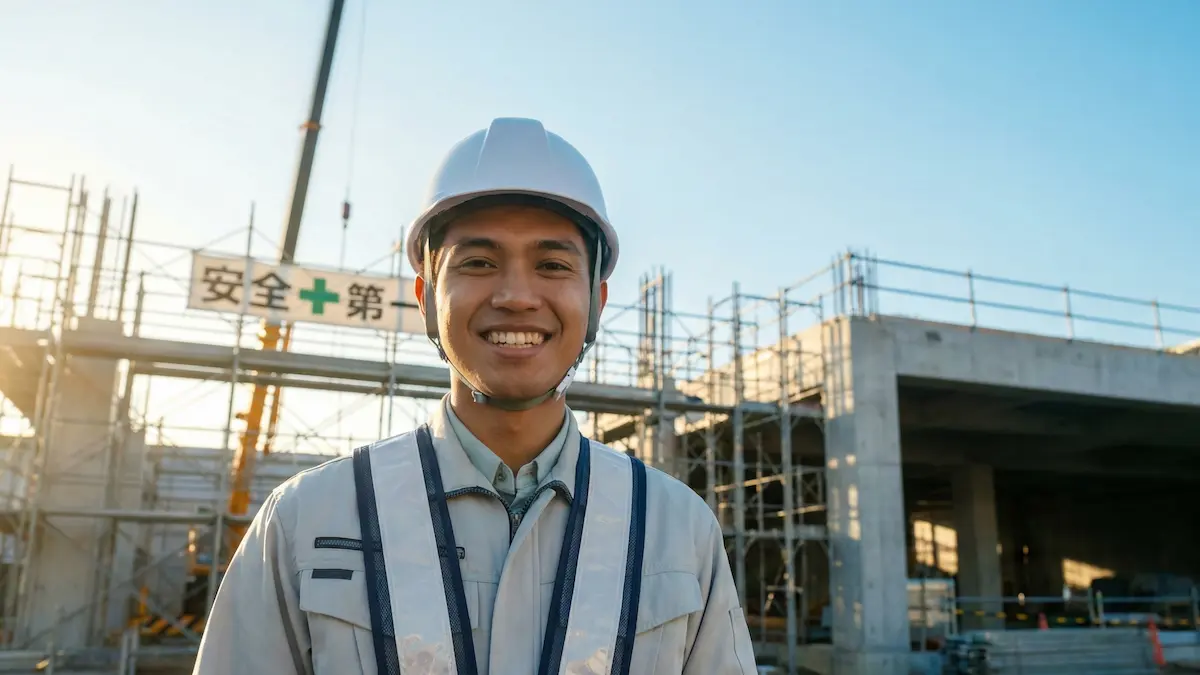
Hi! It’s Sensei.
In Construction (Kensetsu / 建設) work, teamwork is everything.
When carrying heavy things or doing dangerous tasks, if there is no Trust (Shinrai / 信頼), people get hurt.
The Craftsmen (Shokunin / 職人) on site are looking closely not only at your work but also at **”how you spend your break time” and “your small greetings.”**
This time, I will introduce 10 site-specific manners to help you be loved and called “He is a good guy! (Koitsu wa ii yatsu da! / こいつはいい奴だ!)”
- 1. Canned Coffee “Janken” and “Treating (Ogori / 奢り)”
- 2. The Magic Words “Stay Safe! (Goanzen ni! / ご安全に!)”
- 3. Value Tools (Dougu / 道具) More Than Anyone
- 4. Do Radio Calisthenics (Radio Taiso / ラジオ体操) Seriously
- 5. “5-Minute Early Action” Builds Trust
- 6. Smoke ONLY in “Designated Areas”
- 7. Tighten Your Helmet’s Chin Strap (Ago-himo / あご紐)
- 8. Loud Voices Do Not Mean They Are Angry
- 9. Be Thorough with Waste Separation (Bunbetsu / 分別)
- 10. Watch Out for Smartphone Use During Breaks
1. Canned Coffee “Janken” and “Treating (Ogori / 奢り)”
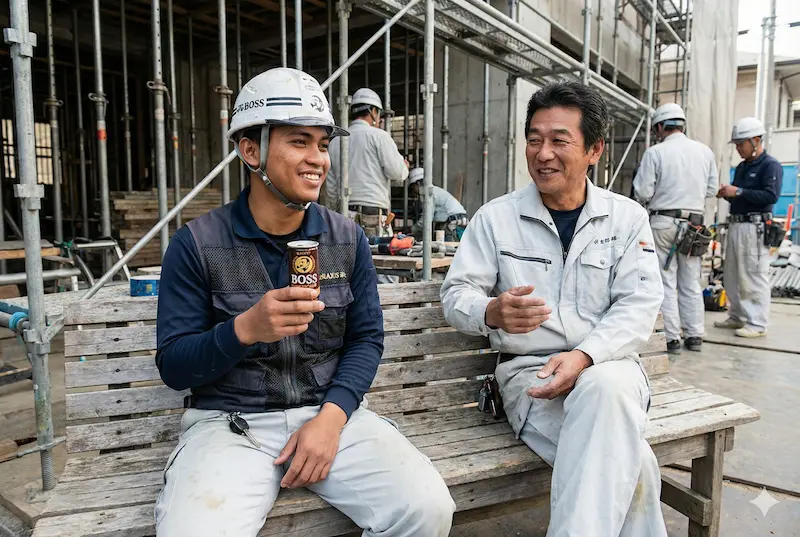
There is a “Canned Coffee” culture during breaks (10:00 AM and 3:00 PM).
If a senior asks, “Do you want some coffee?”, don’t hesitate and say, “Thank you! (Arigatou gozaimasu! / ありがとうございます!)”
Also, if you join a “Rock-Paper-Scissors (Janken / ジャンケン)” game where the loser buys for everyone, you’ll make friends quickly.
If a senior buys one for you, the iron rule is to always say “Thank you for the treat (Sakki wa gochisousama deshita / さっきはご馳走様でした)” during the next break.
2. The Magic Words “Stay Safe! (Goanzen ni! / ご安全に!)”
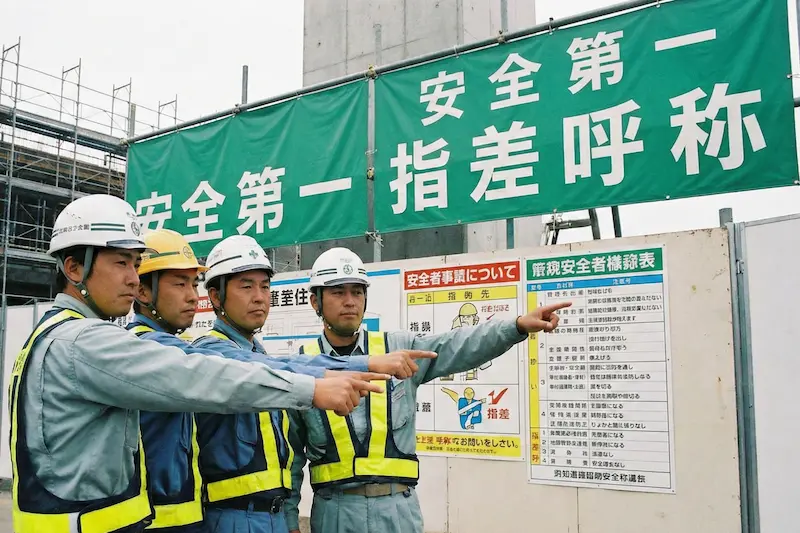
This is a special greeting used on construction sites instead of “Otsukaresama desu.”
A trainee who can say “Goanzen ni!” loudly when passing someone or entering a site will be trusted by craftsmen as someone who “understands the Japanese construction site.”
3. Value Tools (Dougu / 道具) More Than Anyone
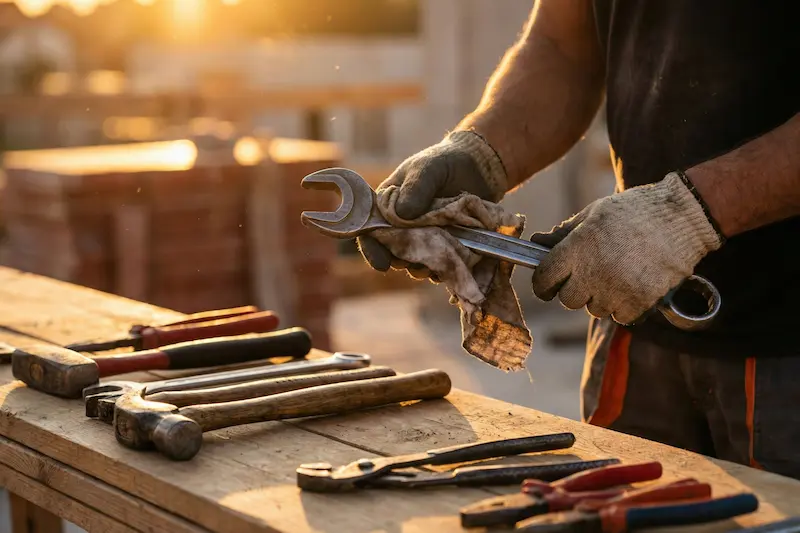
Craftsmen treat their tools like their own children.
Handling tools with your feet or throwing them is a big NO. Always wipe the tools you borrowed before returning them, and avoid placing them directly on the ground.
4. Do Radio Calisthenics (Radio Taiso / ラジオ体操) Seriously
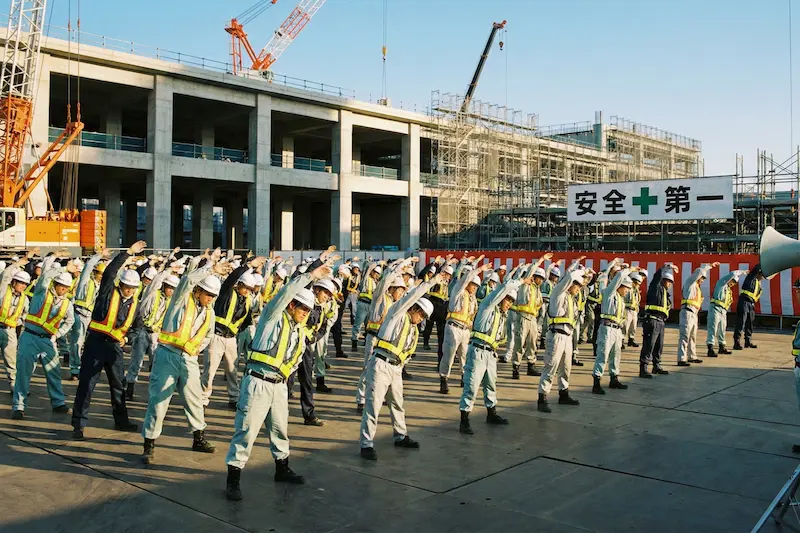
Mornings in Japan start with “Radio Taiso.”
If you do this lazily, people will think you “lack motivation.” On the contrary, if you do it seriously with big movements, you will be praised for having “good energy!”
5. “5-Minute Early Action” Builds Trust
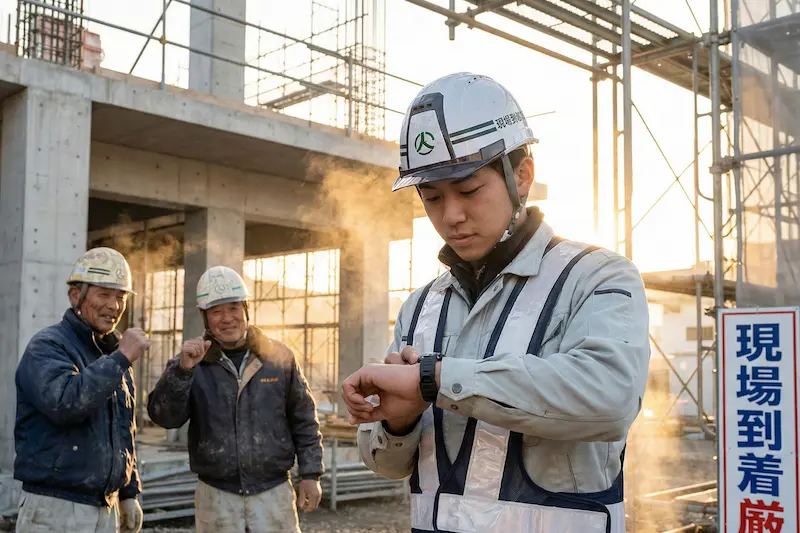
If work starts at 8:00, finish your preparations and be ready by 7:55.
People who arrive at the last minute are disliked on construction sites. The mindset of “being punctual = not stealing other people’s time” is important.
6. Smoke ONLY in “Designated Areas”
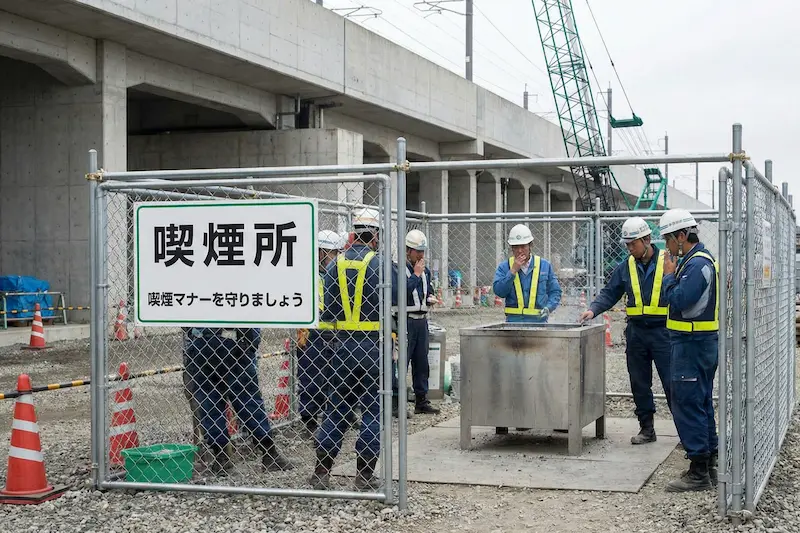
Many areas on site are No Fire (Kaki Genkin / 火気厳禁).
Smoking in secret or while walking is a rule violation that could get you sent home immediately. Always smoke in the designated Smoking Area (Kitsuenjo / 喫煙所).
7. Tighten Your Helmet’s Chin Strap (Ago-himo / あご紐)
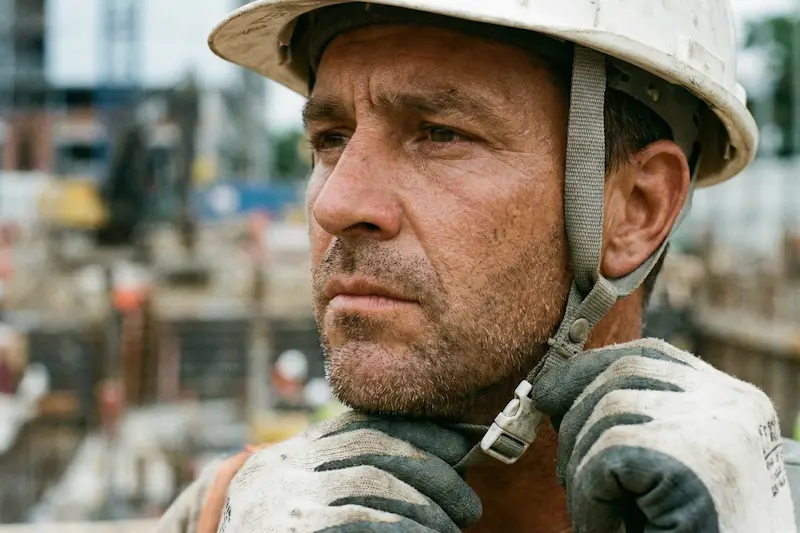
They say, “A loose chin strap means a loose mind.”
Wearing it sloppily is not only dangerous but also makes craftsmen think you are “disrespecting the work.” Always keep it tight.
8. Loud Voices Do Not Mean They Are Angry
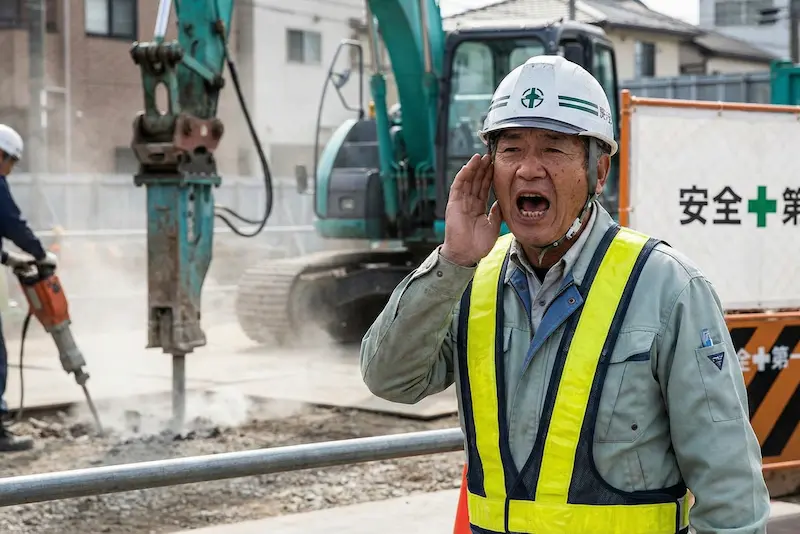
Sites are noisy because of machinery, so craftsmen talk loudly.
Some trainees misunderstand and feel down thinking they are “being yelled at,” but usually, they are just “shouting so you can hear.” Don’t be afraid, and respond with a loud voice too!
👂 Can you understand the craftsmen’s words?
Japanese on-site is fast and difficult, right? Do you ever worry, “Are they angry? Are they giving instructions?”
If you understand the language, work mistakes decrease and break times become more fun.
If you want to “Speak more Japanese!”, why not start studying on your smartphone?
9. Be Thorough with Waste Separation (Bunbetsu / 分別)
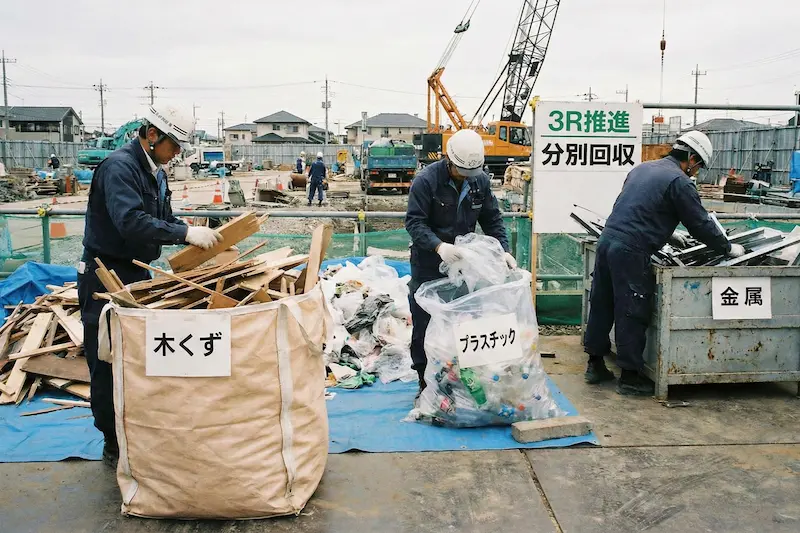
Lots of waste is produced at construction sites, but you must separate wood, plastic, and iron finely.
“Someone who can clean is someone who can work.” If you take the lead in cleaning up trash that no one else wants to do, your reputation will skyrocket.
10. Watch Out for Smartphone Use During Breaks
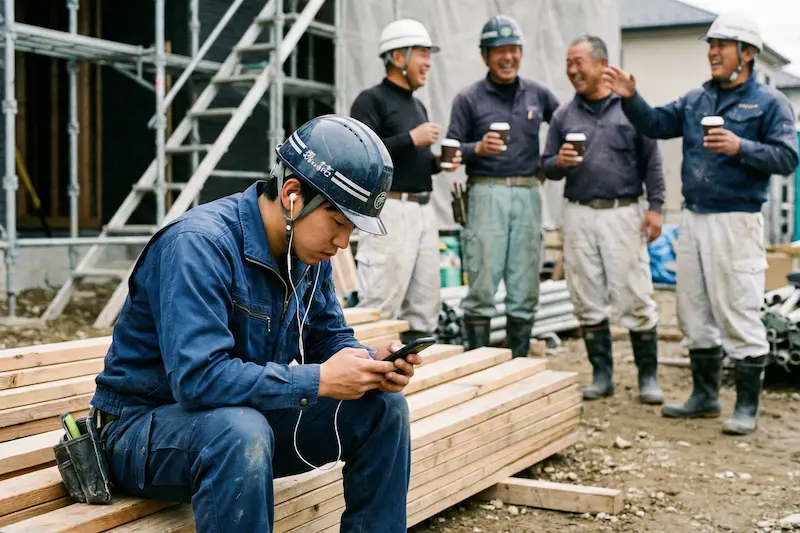
Video calls with family during breaks are fine, but if you only look at your phone, you can’t communicate with your team.
If you show an attitude of taking off your earphones and listening to the conversations around you, you’ll be liked more and your Japanese will improve.
If you think “Is this site rule strange?”,
don’t judge by yourself; please consult with the person in charge at your supervising organization (Kanri Dantai / 監理団体).
Well then, “Goanzen ni!” for tomorrow too!