Hi! It’s Sensei.
“My body feels heavy from work every day…”
“I can’t get rid of my fatigue even after sleeping…”
I have a question for you.
Are you just finishing with a shower (Shawa / シャワー) every day?
Since your home country is warm, washing off sweat with a shower might have been enough.
But if you are doing “manual labor” here in Japan, a shower alone is not enough.
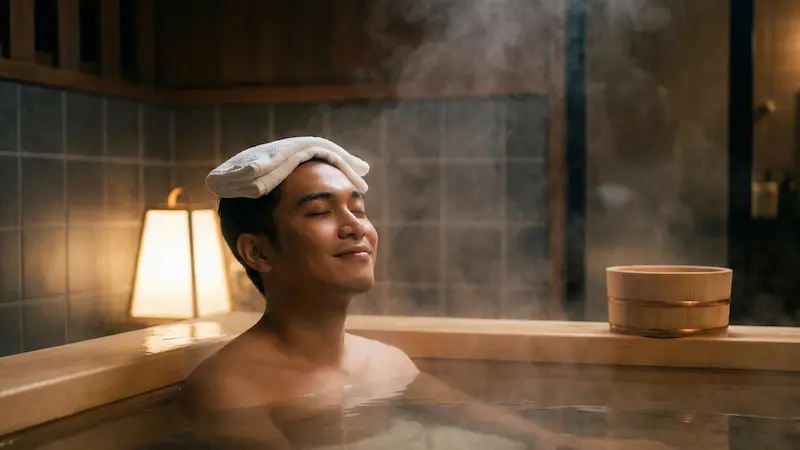
Why do Japanese people take the trouble to fill a “Bathtub (Ofuro / お風呂)” with hot water every day?
It’s not just to wash the body. It’s “to treat the body.”
A Japanese bath is a “0-yen Massage”
The reason why Japanese seniors are so energetic is that they soak in hot water every day.
Bathing has amazing effects.
- Blood Circulation: When the body warms up, blood flow improves, and muscle pain is washed away.
- Buoyancy (Floating): Your body weight feels lighter in the water, giving your lower back and legs—which carry heavy loads—a break.
- Deep Sleep: When your core is warmed up, you can fall into a deep sleep the moment you get into bed.
In other words, a bath is the “cheapest massage you can get.”
Going to a massage shop costs 3,000 yen, but a bath only costs for water and gas.
Just trust me and try filling the tub tonight and soaking for just 10 minutes.
The next morning, you’ll be surprised at how light your body feels.
The magic to turn your home bath into an “Onsen”
“But just soaking in hot water is boring…”
I understand. That’s why Japanese people use this.
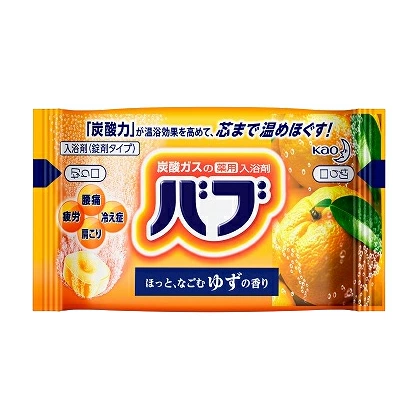
💊 Bath Additive “Bub (バブ)”
Just put one of these in the hot water.
“Carbonated (Tansan / 炭酸)” bubbles fizz out, changing the color and scent of the water.
These bubbles soak into your tired body and improve blood circulation even more.
It costs about 50 yen per piece, making your daily bath time fun.
Assorted scent sets are sold on Amazon, so give them a try!
Let’s go to an “Onsen (温泉)” together sometimes!
One thing you absolutely must experience while in Japan is an “Onsen (Hot Spring / 温泉)” or “Sento (Public Bath / 銭湯)”.
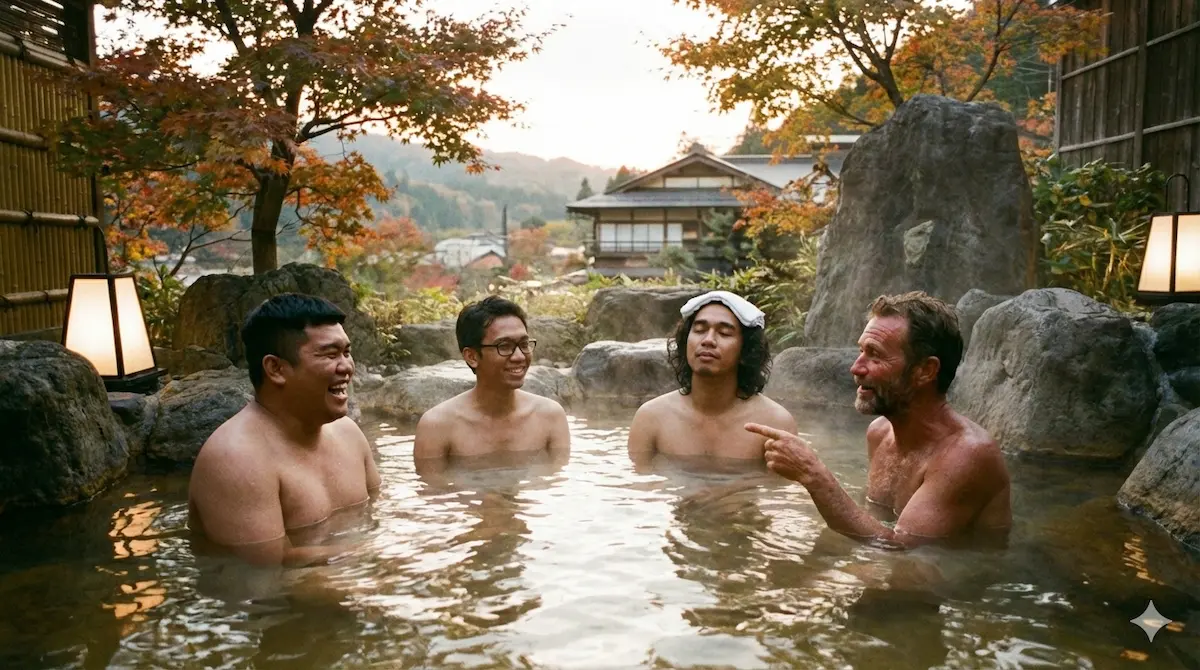
You enter a large, spacious bath with friends or colleagues.
“Wait, I have to be naked (Hadaka / 裸) in front of everyone!?”
It’s embarrassing, right? I understand.
But Japanese people value this as “Hadaka no Tsukiai (Naked friendship / 裸の付き合い).”
By taking off your clothes and relaxing together, your hearts can connect better than with words.
⚠️ 4 Rules to avoid getting in trouble at an Onsen
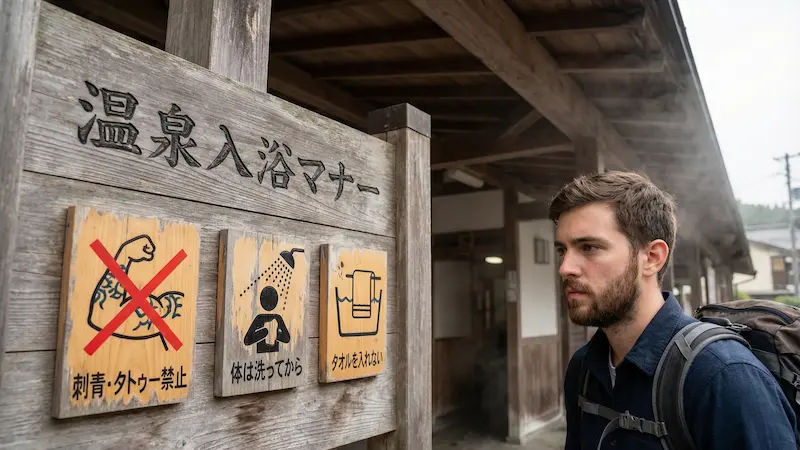
Japanese Onsen have strict rules.
You might get into trouble if you don’t know them, so remember these!
-
🚫 1. No Swimsuits
Even if it’s embarrassing, the rule is to enter in your natural state (fully naked).
Everyone is naked, so no one cares about your body. -
🚿 2. Wash your body first
The bathwater is shared by everyone.
Do not enter with a dirty body. Always clean yourself with a shower before getting in. -
🧼 3. Keep your towel out of the water
Put your towel on your head or on the edge of the bath.
Rinsing it in the water is a breach of etiquette. -
🐉 4. Tattoos are often prohibited
This is the most important part.
In Japan, many places do not allow people with Tattoos (Irezumi / 刺青) to enter. If you have a tattoo, look for a “Private Onsen (Kashikiri-buro / 貸切風呂)” or check if you can cover it with a sticker.
Perfect your recovery with “Salonpas” after the bath
After your body is warmed up in the bath, it’s the best time because your muscles are relaxed.
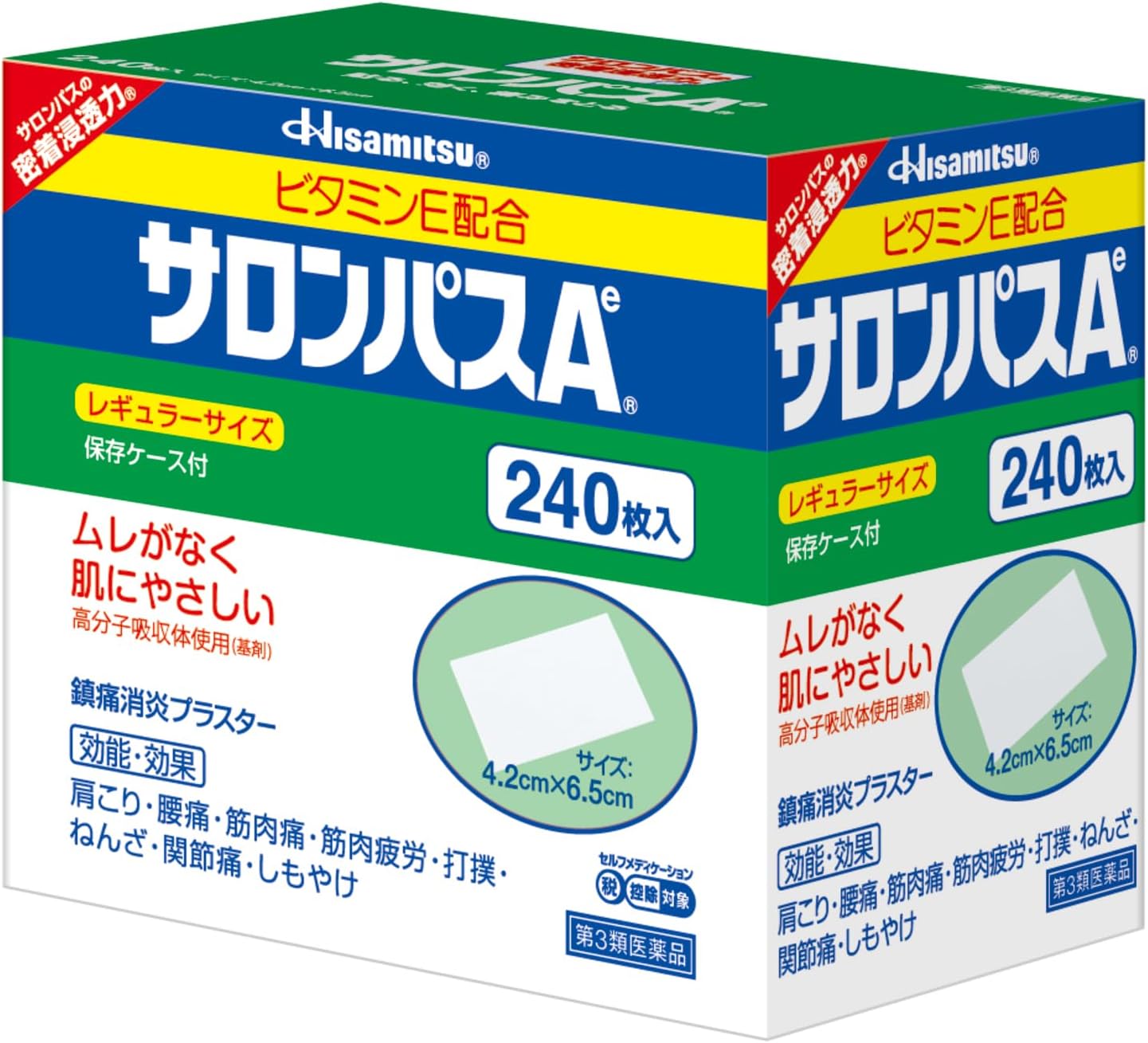
If your back or shoulders still hurt, stick this on before going to bed.
🌿 Salonpas (サロンパス)
The most famous pain-relieving sticker in Japan.
A pack of 140 sheets is a little over 1,000 yen. The cost-performance is the best.
Summary: Take care of your body
Working in Japan is tough.
But the saddest thing would be if you had to return home because you broke your health.
Start taking a relaxing bath from today, and let’s do our best again tomorrow!