Hi! It’s Sensei.
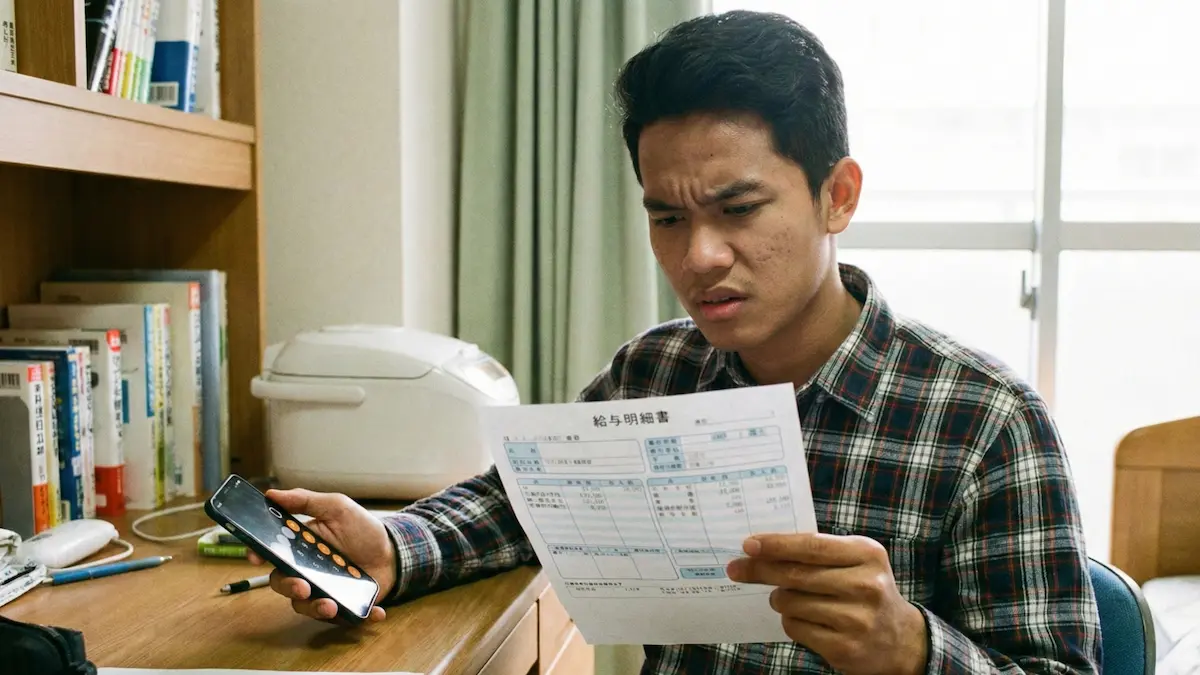
On your first payday, you looked at your Payslip (Kyuryo Meisai / 給料明細) with excitement, but…
Did you feel shocked, thinking “Eh!? It’s much less than I expected!”?
“Is the company stealing my money?”
I understand why you might suspect that.
But please rest assured.
Those are “Taxes (Zeikin / 税金)” and “Insurance (Hoken / 保険)” that all Japanese people have deducted as well.
Today, I (Sensei) will teach you all the “meanings of the difficult Kanji” written on your payslip.
By looking at this, you will understand exactly how much you are earning and what your money is being used for.
View Your Payslip as “3 Boxes”
Payslips look complicated, but they are broadly divided into only three parts.
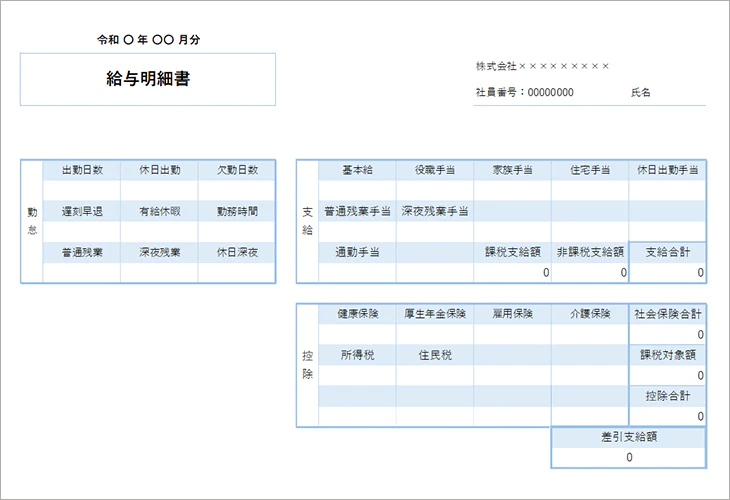
- Shikyu (Payment / 支給): Total money you earned
- Kojo (Deduction / 控除): Money taken out
- Sashihiki Shikyugaku (Net Pay / 差引支給額): The actual money that enters your hand
1. Terms for Shikyu (Payment / 支給)
First is the money you earned by working.
Let’s check if this part is correct.
| Kanji | Meaning |
|---|---|
| 基本給 (Kihon-kyu) |
Basic Salary. (Hourly wage × Hours worked) |
| 残業手当 (Zangyo-teate) |
Overtime Pay. You get 1.25 times your normal hourly wage! |
| 深夜手当 (Shinya-teate) |
Late-night bonus for working between 10 PM and 5 AM. |
| 交通費 (Kotsu-hi) |
Transportation Allowance for train or bus. |
Look at the “Kintai (Attendance / 勤怠)” column and check every month if the “Overtime hours (Zangyo Jikan / 残業時間)” figures are correct.
2. Terms for Kojo (Deduction / 控除)
This is the most important part.
You might think “Why is it taken out!?”, but there are reasons for this.
| Kanji | What is this money for? |
|---|---|
| 健康保険 (Kenko Hoken) |
Health Insurance so you only pay 30% at hospitals. The company pays half. |
| 厚生年金 (Kosei Nenkin) |
Money for the future. ※You get over 600,000 yen back when returning home! (Think of it as savings) |
| 雇用保険 (Koyo Hoken) |
Employment Insurance that protects you if the company goes bankrupt or you are laid off. |
| 所得税 (Shotoku-zei) |
National Income Tax. |
| 住民税 (Jumin-zei) |
Residence Tax for the town where you live. ※Caution: This gets higher from the 2nd year! |
| 家賃・光熱費 (Yachin) |
Dormitory rent, electricity, and water bills. Check if it matches your contract. |
Don’t be angry that “Kosei Nenkin is expensive!”
This comes back to you as a “Lump-sum Withdrawal Payment (Dattai Ichijikin / 脱退一時金)” when you leave Japan.
Check this article for details 👇
3. Sashihiki Shikyugaku (Net Pay / 差引支給額)
This is also called “Tedori (Take-home Pay / 手取り).”
It is the actual amount transferred to your bank account.
Generally, it is normal for it to be about “75% to 80% of the Gross Payment (Soshikyugaku / 総支給額).”
(Example: If you earn 200,000 yen, your take-home pay will be around 160,000 yen.)
If only about half is left, something is wrong.
Consult Sensei or someone from your Supervising Organization (Union / 組合) immediately.
Summary: Don’t Throw Away Your Payslips!
A payslip is not just a piece of paper.
It is evidence that “the salary is being paid properly.”
You may need it if you have trouble with the company or when performing pension procedures.
Keep them safely in a file every month!